
Photos/CD: Aqua Rose @aquarosephoto x @mulletxbarbie
Model: @mengtiian
MUA: @mulletxbarbie
MUA Assists: @_d_zoe_d_
Photo Assist: @chribun
Production Assist: @stephrommelt










The post SHAPESHIFTER appeared first on LADYGUNN.

The post SHAPESHIFTER appeared first on LADYGUNN.
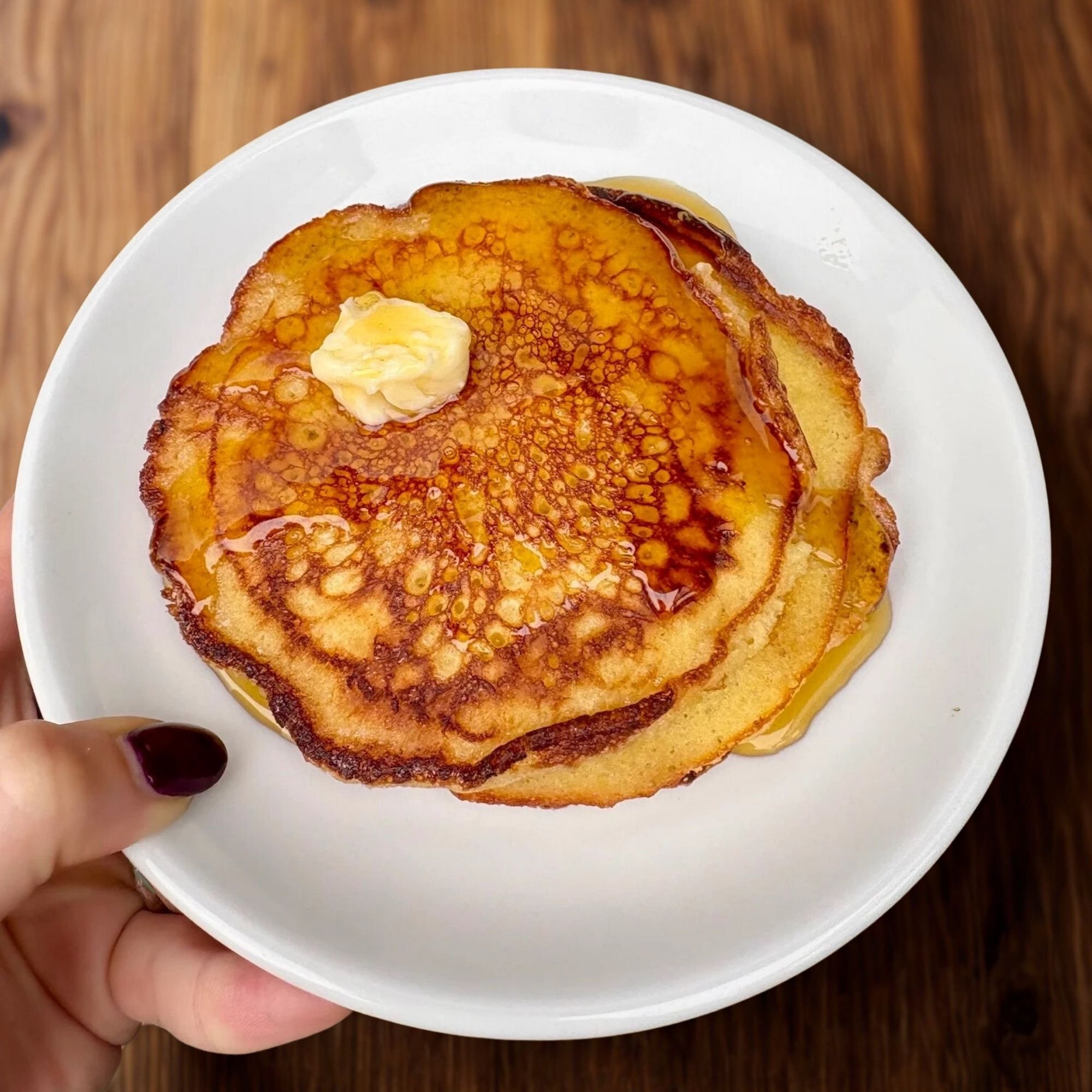
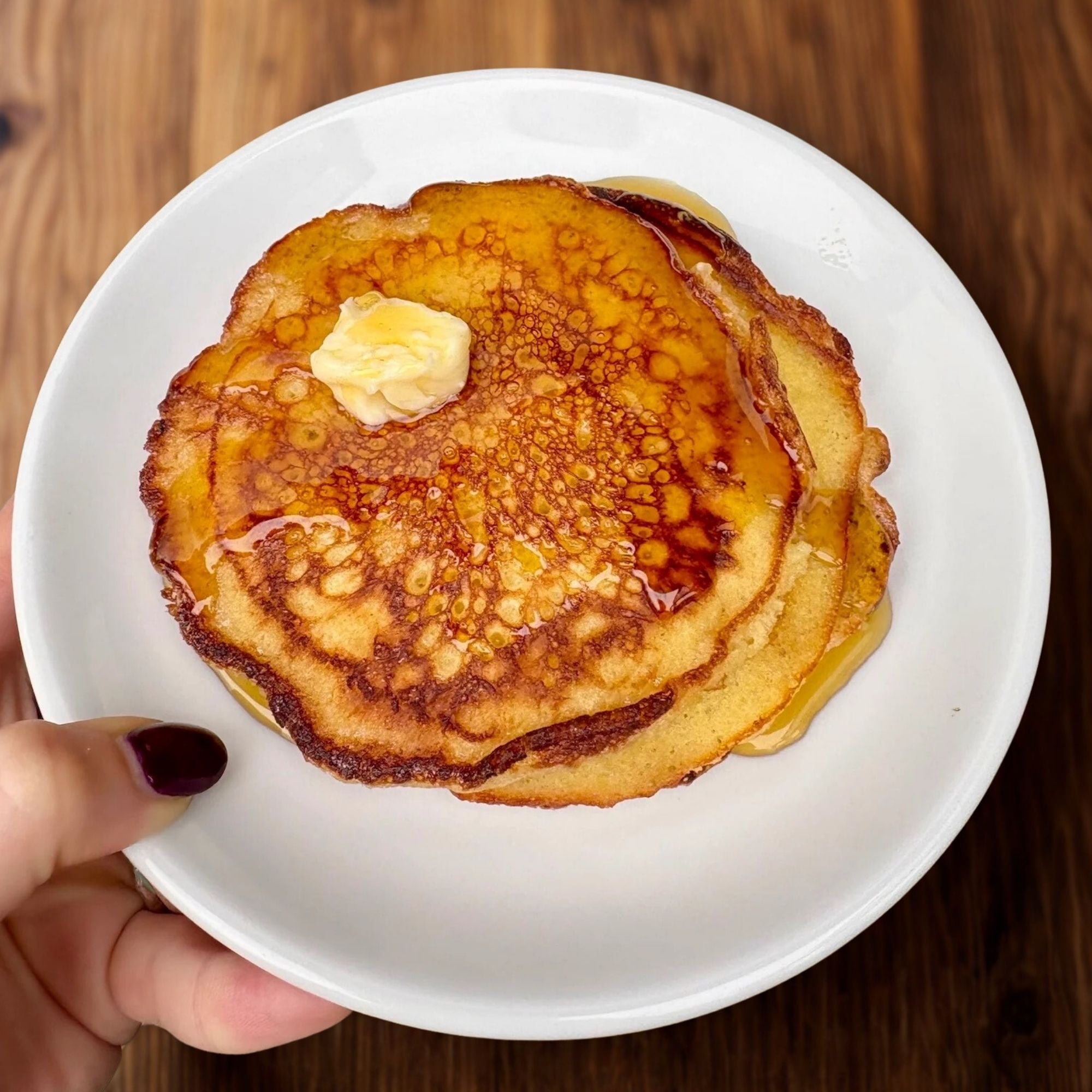
When it comes to pancakes, I tend to stick with the basic styles — buttermilk, Bisquick, banana — and my general take is that if you don’t over-mix and you keep an eye on your burner, you’ll be great.… Read more
The post Minneapolis Salted Butter Pancakes appeared first on Cup of Jo.


When I first read the words “Afro-Scandi pop,” I couldn’t help but be intrigued. How is that going to work exactly? Will it even work at all in the first place? Fortunately, Tolou’s vision and talents are both so strong that it doesn’t take very long for the proposal to land and hook you in with her unique energy, and that’s precisely what she named her debut album.
“Energy” is made up of twelve tracks moving between pop, soul, gospel, and Afro rhythms, none of it feeling like fusion because nothing needed fusing. She calls it Afro-Scandi pop.
Rooted in classical training across opera and jazz and raised leading church choirs, Tolou was discovered by Wyclef Jean in one of those choirs. During lockdown, she taught herself production until the vivid sounds in her head could finally take shape. Influences peek through—Frank Ocean, Burna Boy, Robyn—but they’re signposts, not the destination.
The point is the title. Energy. What you carry. What you let in. Tolou calls the album a cleanse, a way back to what actually matters, and you believe her because nothing here strains.
You call your sound “Afro-Scandi Pop.” What helped you conceptualize and synthesize this blend? Any inspirations and references to point to?
It really grew out of who I am—two cultures living inside one body. On one hand, I was raised with the pulse of African music, the rhythm, the storytelling, the soul. Artists like Wizkid, Burna, and Fela gave me my roots. On the other hand, Northern Norway gave me silence, space, and this haunting kind of beauty. I think that’s where the softness and melancholy come in. Afro-Scandi Pop, to me, is what happens when warmth meets stillness… It’s a blend I didn’t invent—I grew into it naturally.
You have called the album a coming-of-age story. Which track feels like the pivotal chapter where you truly understood yourself?
Definitely “Unwind.” That was the moment I stopped hiding. It’s about letting my light spill out without apology—the softness, the sensuality, the joy. As women, we’re often told to tuck those parts away. But that song was me saying, No more shrinking. I’m allowed to be gentle and powerful, playful and grounded. That track was like giving myself a permission slip to be all of me.
Beyond sound, what does Afro-Scandi Pop represent for you as a way of moving through the world?
Freedom. It’s a way of being that says contrast doesn’t have to cancel itself out—it can dance. I don’t need to choose between this or that, soft or strong, sensual or spiritual. I can be all of it. Afro-Scandi is about trusting your full self, even the parts that seem like opposites, and making harmony from them. That’s how I live.
Stepping into full creative control during the pandemic was a profound shift. How has that changed the way you approach collaboration now?
Whew—it changed everything. That season made me sit still with my own voice. No noise, no distractions, just me. I learned to trust my instincts, even the quiet ones. So now when I collaborate, I don’t come in trying to prove anything. I come in already rooted, already clear. It’s not about approval; it’s about creative exchange.
If Energy is meant to function as an energy cleanse, where is that cleansing most potent?
It starts right at the beginning with the title track, “Energy.” That song is a ritual. It’s me calling in what I want, clearing out what I don’t. Then the whole album kind of unfolds like my inner diary—full of doubt, light, softness, strength, and finally, peace. By the time we get to “Coco,” it’s like exhaling into self-love. That’s where the cleanse lands for me—in the return to self.
From “Coco” to now, how has the confidence you sing about evolved?
Mmm, back then, I had confidence that came from spark. Now it comes from depth. Life humbled me a bit; it broke me in places I didn’t expect. But I found God in those moments. I found grace. Now my confidence feels quieter, more anchored. It’s not loud, but it’s unshakeable. I don’t need to be seen to know I’m real.
Working with legends like Tricky Stewart is a major collaboration. What did you take away from that experience?
What struck me most was how sacred the space felt. Tricky created this atmosphere where everyone could just be… honest. No ego, no tension. Just flow. He’s intentional, like spiritually intentional—and that reminded me how important the energy in a room is. When the vibe is right, the music just breathes.
Your classical training is a unique layer. Does it still consciously inform your process?
It’s in the background, like muscle memory. Classical training gave me discipline, breath control, and a deep respect for the voice as an instrument. But now I let it whisper rather than lead. It gave me the map, and now I wander freely. It’s like… I know the rules well enough to break them beautifully.
You move between music, acting, and fashion. Are these separate canvases or the same frequency?
One frequency, just different textures. Music is the heartbeat. Fashion is how I dress the feeling. Acting is me stepping into different versions of myself. It all comes from the same river. I just shift how I pour it.
What kind of acting roles are you drawn to?
Ooh, the weird ones! I love characters who surprise you—women who are layered, messy, mysterious, and strong in quiet ways. I’m always pulled toward stories that expand what femininity can look like. More magic, less stereotypes.
What’s up next for Tolou?
Honestly? Play. I introduced myself with “Energy”—now I want to stretch. Get weirder. Get louder. Or softer. Collaborate with people who make me feel something. I’m in this season of curiosity… letting my art grow in whatever direction it wants. The foundation is laid; now I’m just dancing on top of it.
CONNECT WITH TOLOU:
The post THE FREQUENCY IS HERS: TOLOU ARRIVES WITH “ENERGY” AND SHE’S NOT SHRINKING FOR ANYONE appeared first on LADYGUNN.


Have you seen the viral sweet potato ground beef cottage cheese bowls popping up everywhere? I’ll be honest, I scrolled right on past this combo for a while because, well, it sounded weird.
However, I’ve been a little burned out on lunch ideas lately, especially ones that help both David and me hit our protein goals without a lot of effort. I wanted something simple I could make for us, using simple ingredients we already keep around. It turns out that this bowl checks all the boxes: it’s warm, filling, high in protein, and incredibly easy to throw together.
Being that I’ve been shooting for specific protein goals, I made this bowl using my digital kitchen scale so I could report the macros accurately. Will I use it every time? Probably not, but it helps to get a visual of what I’m going for before switching to eyeballing it.
And the result? A lunch that’s surprisingly delicious and packed with protein. A true winner worth sharing!
The beauty of this bowl is the balance of flavors and nutrients:

It’s one of those meals that feels cozy and satisfying but takes almost no effort to prepare.
Here are the ingredients and measurements I used for my bowl.
That’s it—simple, cozy, and ready in minutes.
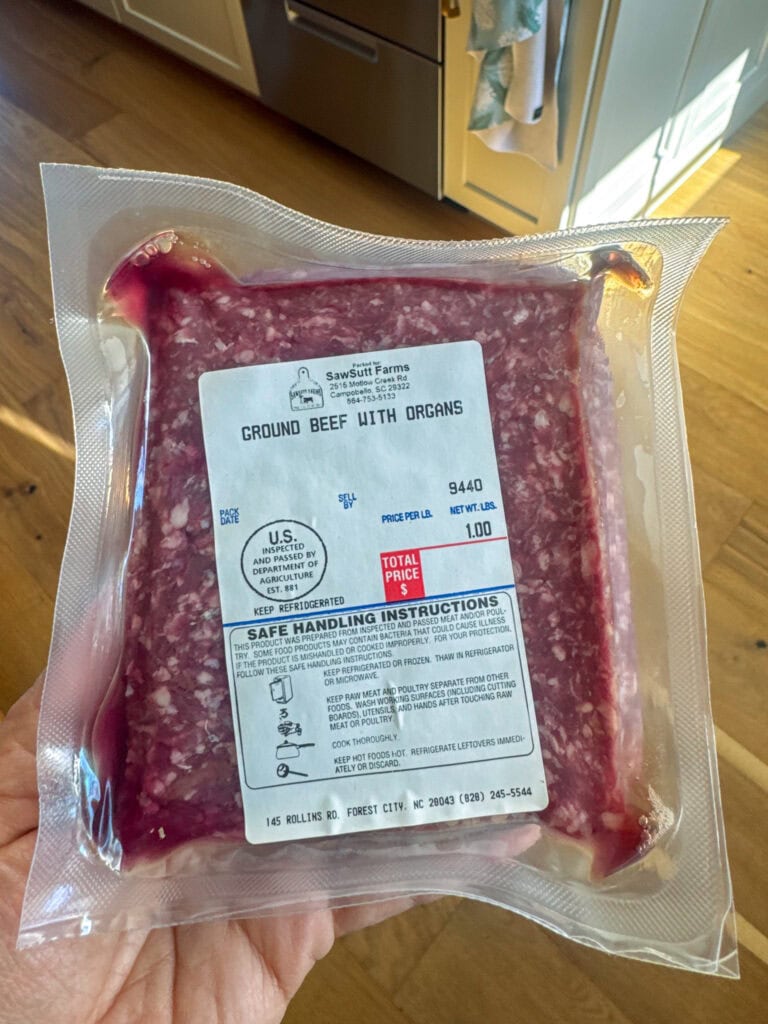
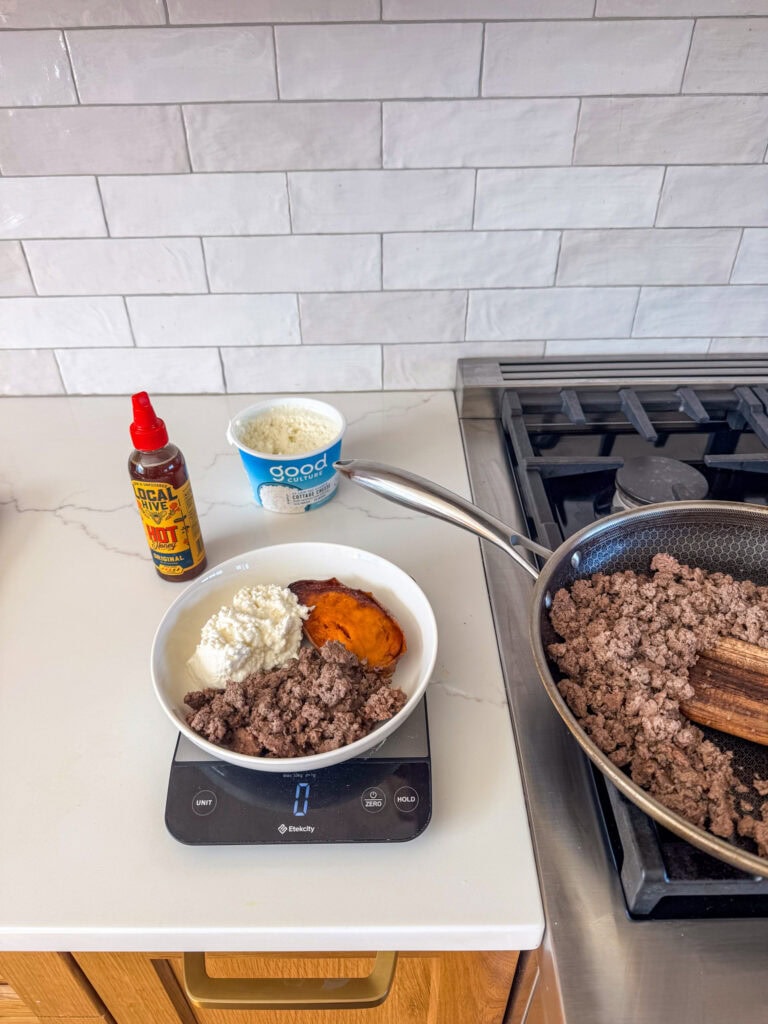

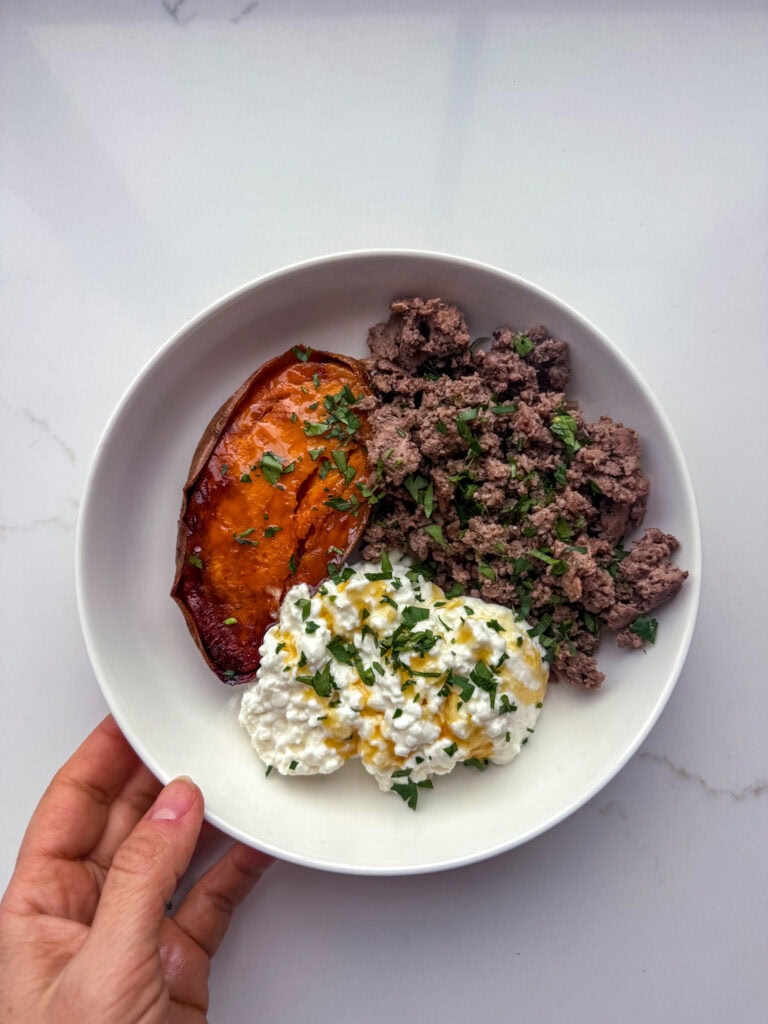
Because I weighed everything using a digital scale and entered it into My Fitness Pal to analyze using specific ingredients, I feel these macros are fairly precise for this bowl:
For me, this is a great high-protein lunch that kept me full for hours, especially when paired with a walk outside or a busy afternoon.
One of the things I love most about this bowl is how easy it is to prep ahead.
You can:
It’s one of those simple meals that makes eating enough protein during the day much easier.
*For these I tried the method of slicing the sweet potatoes in half lengthwise first (be careful!), rubbing them lightly with olive oil, and sprinkling with salt and pepper. Then placing them cut side down on a parchment-lined baking sheet and roasting at 400°F for about 30–40 minutes, until tender and caramelized.
While this bowl is great for protein, you can easily bump up the fiber with a few additions. Because this is the year of fiber, right?! If it is for you, too, make sure you’ve tried my chia seed pudding.
Try adding:
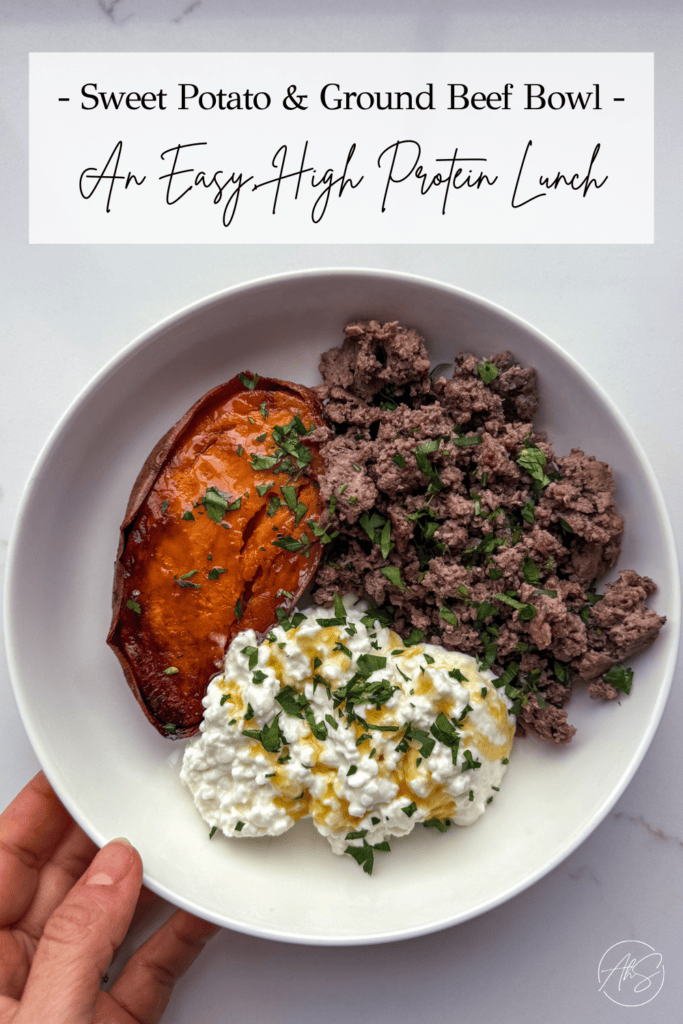



This sweet potato ground beef cottage cheese bowl is an easy high-protein lunch made with baked sweet potato, seasoned ground beef, cottage cheese, and hot honey.
Bake the sweet potato until tender.*
Cook the ground beef in a skillet over medium heat until browned and fully cooked. Season lightly with salt and pepper.
Add 100 g baked sweet potato to a bowl and gently mash with a fork.
Top with the cooked ground beef and ½ cup cottage cheese.
Drizzle with 1 tablespoon hot honey and sprinkle with fresh parsley.
Serve warm and enjoy.
*I like to bake the sweet potato ahead- cut the sweet potato in half lengthwise, rub with olive oil, sprinkle with salt and pepper, and bake cut side down at 400°F for 30–40 minutes. Let cool and store in fridge until ready to make the bowl.
You can easily increase the fiber in this bowl by adding black beans, roasted broccoli, avocado, chickpeas, or shredded cabbage.
If you’re feeling stuck in a lunch rut like I was, this sweet potato ground beef cottage cheese bowl is worth trying. It’s quick, satisfying, and surprisingly delicious for such a simple combination of ingredients.
And if you’re working on hitting your protein goals, it’s a really easy way to get a big protein boost without spending much time in the kitchen.
If you try it, let me know what toppings you add—I’m always looking for new variations!

By Jasmin Espinal
In an era when tattoos have become mainstream, true mastery still stands apart. Few artists embody that distinction more clearly than Diego Dellarte.
“Tattoo is art,” he says simply. “So, it has to be art.”
At Bad Habits Tattoo and Laser in Fort Lauderdale, nothing is rushed. Diego studies his reference—light first, then form, then shadow—before the needle ever moves. The machine hums; his focus doesn’t waver. Hyper-realism leaves no room for ego. “If the shadow is wrong, everything is wrong,” he says. “You cannot guess.”
In his hands, skin becomes canvas. His portraits carry depth. Eyes hold reflection. Fabric folds convincingly. Clients don’t ask for quick designs; they come for permanence executed with precision.
“I always loved drawing,” he says. “Since I was a kid, I never stopped.”
Born in Brasília, Brazil, Diego traces that obsession back to his mother, a nurse who once drew him a picture of Batman. “That was it,” he says with a smile. “After that, I just kept drawing.”
Friends began asking him to create images they planned to have tattooed. Eventually he realized he wanted control over the final outcome. “I wanted to do it myself. I didn’t want someone else to change what I imagined.”
His father wasn’t convinced. “He said, ‘Tattoo is for delinquents,’” Diego recalls, laughing. The conversation shifted when a family acquaintance mentioned a successful tattoo artist earning a substantial income. “When he heard that, he started to think differently.”
His mother bought him his first equipment. “She always supported me,” he says. “From the beginning.”
Under the mentorship of fellow artist Alex Garcia, Diego began tattooing. “I studied everything—skin, depth, contrast. You have to know how the skin works,” he says. “Hyper-realism is patience.”
He opened a commercial studio in Brazil, but growth required risk. “If you are comfortable, something is wrong,” he says. “You cannot evolve being comfortable.”
That belief took him to Italy, where he immersed himself in Renaissance art. “I wanted to understand the masters,” he says. There, he studied chiaroscuro—the dramatic contrast of light and shadow made famous during the Renaissance and Baroque periods by painters like Caravaggio and Leonardo da Vinci, who used it to create emotional intensity and three-dimensional form.
“I learned to see light differently,” Diego says. “Not just to copy a photo.”
He brought that discipline back to Brazil, not first to canvas, but to skin.
Today, he builds tattoos in layers, almost like oil glazing. “You don’t rush,” he says. “You build.” Skin tones feel dimensional. Metallic surfaces catch reflection. Texture reads as stone, silk, steel. His realism isn’t replication; it’s interpretation sharpened.
By 2016, he was running another studio. Then the pandemic changed everything. In 2022, an opportunity brought him to Fort Lauderdale and Bad Habits Tattoo and Laser.
Starting over didn’t intimidate him. “My family calls me crazy,” he says with a grin. “I had a beautiful studio in Brazil and I sold everything. I did this before to go to Italy. I did it again to come here.”
Clients now travel specifically for his hyper-realistic portraits—family members, cinematic compositions, deeply personal pieces rendered with restraint and depth. “Every highlight is important,” he says. “Every shadow has a reason.”
And the evolution continues.
“I’m starting my painting career now,” Diego says. “It’s the same discipline. Just a different surface.”
For him, tattooing was never rebellion or trend. It demanded discipline.
“You have to take risks,” he says. “Don’t be scared. If you want to grow, you move.”
Tattooing has traveled far from its early associations. In studios like his, it has become something else entirely—intentional, disciplined, elevated.
And in a medium where permanence is the point, conviction is everything.





The post Flesh and Canvas appeared first on Lifestyle Media Group.


My loves, how are you doing? I wanted to take a moment to check in. The headlines have been horrifying; I know the schoolgirls in Iran are on everyone’s minds, along with so much other news.… Read more
The post How Are You Doing? appeared first on Cup of Jo.
Most people scan their fridge door, spot something past its date, and shrug. Sometimes that instinct is fine. Sometimes expired condiments can land you in the emergency room.
The difference usually comes down to one thing: what the condiment is made from.
Egg-based and dairy-based condiments carry genuine food safety risks when they expire or are stored improperly. Acid-heavy, fermented, and high-salt condiments are far more forgiving. Knowing which is which is one of the most practical things you can do for your family’s health.
Jump to a section
What dates actually mean
Condiments to toss
Surprisingly forgiving ones
How to spot spoilage
FAQs
The USDA is clear that most date labels are quality indicators, not safety cutoffs. A “best by” date tells you when something is at peak flavor and texture. A “sell by” date is a stocking guide for retailers. According to the USDA Food Safety and Inspection Service, only a “use by” date functions as an actual safety cutoff for most packaged foods.
That said, certain condiments operate by completely different rules. The more an item relies on eggs, dairy, or cream, the less forgiving it becomes once its date passes or once it has been opened. The FDA defines the bacterial danger zone as 40°F to 140°F, the temperature range where Salmonella, E. coli, and Listeria multiply fastest.
The Rule of Thumb
If it is made with eggs or dairy, follow the date closely. If it is built on acid, salt, or fermentation, you usually have more room. When in doubt, smell it, look at it, and use common sense.
High Risk
 Mayonnaise
Mayo is the one condiment most likely to cause real problems when pushed past its date or stored improperly. Commercial mayo uses pasteurized eggs and preservatives, which help to a point. Once expired or left unrefrigerated, it can harbor Salmonella, E. coli, and Listeria. The USDA advises discarding mayo left above 50°F for more than eight hours.
Homemade mayo is an entirely different category. No preservatives, often unpasteurized eggs. Use it within four to seven days, full stop.
Unopened
Up to 1 year
Opened in fridge
2 to 3 months
Homemade
4 to 7 days only
High Risk
 Mayo-Based Condiments
Tartar sauce, garlic aioli, remoulade, and Thousand Island all follow the same risk profile as the mayo jar itself. If a dip or condiment tastes or smells different from when you first opened it, or if it has changed color or become watery, discard it regardless of the date on the label.
Opened in fridge
4 to 6 weeks
Past expiration
Toss it
High Risk
 Ranch Dressing
Ranch combines buttermilk, sour cream, and often mayo, bringing multiple perishable dairy components together in one bottle. It holds for about three months opened and refrigerated. Past its expiration date, texture and smell changes are your discard signals.
Opened in fridge
About 3 months
High Risk
Caesar DressingCaesar dressing often contains raw or lightly pasteurized egg yolks, which are a known potential source of Salmonella. Bottled commercial versions use pasteurized eggs and are safer, but the egg-oil base still becomes problematic past expiration. Do not rely on smell alone with this one.
Opened in fridge
1 to 2 months
High Risk
 Blue Cheese & Creamy Dairy Dressings
Blue cheese dressing combines cheese crumbles, mayo, and sour cream, which are multiple dairy components that can each spoil independently. The powerful cheese smell can mask early signs of spoilage, which makes following the date more important than trusting your nose here.
Opened in fridge
1 to 2 months, then toss
Watch Closely
 Sour Cream
Sour cream spoils faster than most people expect. The USDA recommends consuming it within one to three weeks after opening. A pool of liquid on the surface is normal separation, which is a sign to use it up soon rather than a sign it has gone bad. Once it smells beyond its normal tang, shows mold, or has been open past three weeks, discard it.
Opened in fridge
1 to 3 weeks (USDA)
Watch Closely
 Prepared Horseradish
Horseradish is one of the most honest condiments in your fridge. It tells you immediately when it is past its prime because the sharp, pungent flavor starts fading as soon as you open the jar. By the time it hits its expiration date, most of the heat is already gone. The USDA FoodKeeper recommends using it within three to four months of opening.
Opened in fridge
3 to 4 months
Watch Closely
 BBQ Sauce
Most commercial BBQ sauces contain enough sugar, vinegar, and preservatives to last about four months after opening. Artisan or natural sauces without preservatives have a shorter window. Discard if you see mold, notice a significant change in texture or smell, or if it has been open longer than four months.
Commercial (opened)
About 4 months
Natural/artisan
Check label
The 2-Hour Rule
Any perishable condiment left out at room temperature for more than two hours (or one hour above 90°F) should be discarded regardless of whether it was within its expiration date before being set out. This is a firm FDA guideline.
Several condiments have natural preservative properties that make them remarkably shelf-stable. These are much more forgiving than most people assume.
| Condiment | Opened Shelf Life | More Info |
|---|---|---|
 Hot Sauce (vinegar-based) Hot Sauce (vinegar-based) |
2 to 5 years | |
 Yellow Mustard Yellow Mustard |
1 year | Mustard guide |
 Ketchup Ketchup |
6 months | Ketchup guide |
| Soy Sauce |
Up to 3 years | Storage guide |
 Worcestershire Worcestershire |
1 to 3 years | Storage guide |
 Fish Sauce Fish Sauce |
3 to 6 months | Fish sauce guide |
 Honey Honey |
Indefinite (sealed) | Honey guide |
Your senses provide the most reliable real-time feedback, regardless of what the label says. Discard any condiment that shows any of the following.


 One practical habit: Write the date you open any condiment on the lid with a permanent marker. It takes two seconds and removes all the guesswork.
It depends entirely on the condiment. Acid-heavy condiments like mustard, hot sauce, and vinegar-based dressings have significant flexibility. Egg-based and dairy-based condiments like mayo, ranch, and Caesar carry more risk and should be taken seriously. The USDA clarifies that “best by” dates are quality indicators, not safety cutoffs, but that does not apply equally across all products.
Commercial mayonnaise stored at or below 40°F is generally safe for two to three months after opening. Homemade mayo should be used within four to seven days. The USDA FoodKeeper App, developed with Cornell University, is the most reliable reference for exact shelf life windows across hundreds of foods.
Properly refrigerated mayo that is slightly past its date may simply taste off. Mayo that has been left at room temperature, stored improperly, or is significantly past its date can harbor dangerous bacteria including Salmonella and E. coli. Symptoms typically begin within a few hours and can include nausea, vomiting, stomach cramps, and diarrhea.
Most do, but not all. Mayo, ranch, Caesar, tartar sauce, and other egg or dairy-based condiments must be refrigerated after opening. Mustard, hot sauce, soy sauce, and honey are more flexible, though refrigeration extends quality. See the Better Living Food Storage Guide for specifics on every common condiment.
The FDA defines the danger zone as 40°F to 140°F, the temperature range where bacteria multiply most rapidly. Perishable foods including open condiments should never remain in this range for more than two hours.
The condiments that deserve the most respect are the ones built on eggs or dairy: mayo, ranch, Caesar, tartar sauce, and sour cream. Follow those dates. The condiments built on acid, salt, and fermentation, like mustard, hot sauce, soy sauce, and Worcestershire, give you considerably more room.
When anything looks, smells, or tastes different from how it started, trust that signal over the date on the label. And when it comes to mayo specifically, the cost of a new jar is always worth it.
Quick Reference
Toss when expired: Mayo, ranch, Caesar, blue cheese dressing, tartar sauce, aioli, sour cream.
More flexible: Mustard (1 yr), ketchup (6 mo), hot sauce (2 to 5 yrs), soy sauce (3 yrs), honey (indefinite), Worcestershire (1 to 3 yrs).
More from the Food Storage Guide
Does Mayo Go Bad?
Does Ketchup Go Bad?
Does Mustard Go Bad?
Does Horseradish Go Bad?
Does BBQ Sauce Go Bad?
Does Ranch Dressing Go Bad?
Does Sriracha Go Bad?
Does Fish Sauce Go Bad?
Does Honey Go Bad?
Full Food Storage Guide →
Sources
USDA FSIS: Food Product Dating
FDA: Safe Food Handling
FoodSafety.gov: FoodKeeper App (USDA/Cornell University)
FoodSafety.gov: Cold Food Storage Charts
The post These Expired Condiments in Your Fridge Could Actually Make You Sick appeared first on Better Living.
There is a woman who loves sneaking and peeking.
In her house, especially when her children are sleeping.
To check if her children are wrapped up with blankets.
This woman is caring about her kids.
She doesn’t want them to fall sick.
Sneaking and peeking is her way to keep an eye on them.
Especially when it’s wintertime and always!



Natasha Pickowicz has incredible hair, and a lot of it. As a chef and author (her new cookbook, Everyone Hot Pot, just came out!), she also has a physically demanding job that requires it to be out of the way.… Read more
The post How Natasha Pickowicz Styles Her Rapunzel Hair appeared first on Cup of Jo.
 The Short Answer
Does ranch dressing need to be refrigerated? The answer depends on which type you have.
Shelf-stable bottled ranch, the kind sold in the regular condiment aisle, does not need refrigeration before opening. Refrigerated bottled ranch, the kind sold in the dairy case, must stay cold at all times. Homemade ranch always needs to be refrigerated. And all three types must be refrigerated immediately after opening.
The confusion is understandable. Ranch is sold in two different sections of the grocery store, and each version has genuinely different storage requirements. Knowing which type you have determines whether ranch dressing needs to be refrigerated before opening, after opening, or always. Getting this wrong is mostly a quality issue before opening, but becomes a food safety issue after. For a full overview of how pantry staples and condiments keep, see our Food Storage Guide.
| Type | Before Opening | After Opening |
|---|---|---|
| Shelf-stable bottle (pantry aisle) | Pantry fine; 12 to 18 months at room temp | Fridge required; 2 months (USDA target); up to 6–9 months per StillTasty if no spoilage signs |
| Refrigerated bottle (dairy case) | Fridge always; use by printed date | Fridge; 1 to 2 months |
| Homemade (from scratch) | — | Fridge immediately; 1 to 2 weeks |
| Made from dry seasoning mix | — | Fridge immediately; 2 to 4 weeks |
| Dry seasoning packet | Pantry; up to 18 months | Use promptly once mixed with dairy |
The USDA’s FoodKeeper app lists opened creamy salad dressings as best used within three to four weeks of opening for peak quality, though safety typically extends further when the dressing has been kept continuously refrigerated. For unopened shelf-stable dressings, proper pantry storage allows them to stay at best quality for 12 to 18 months.
 Shelf-Stable Bottled Ranch: Pantry Before, Fridge After
Shelf-stable ranch, like Hidden Valley Original, is formulated specifically to be safe at room temperature before opening. It contains preservatives including sorbic acid and calcium disodium EDTA that prevent bacterial and mold growth. The bottle is sealed to maintain a low-oxygen environment inside.
Before opening, store it in a cool, dark pantry away from heat sources and direct sunlight. Heat accelerates the breakdown of flavor compounds over time, so avoid storing it next to the stove or in a warm cabinet. Once you open the bottle, refrigerate it immediately. At that point the preservative system is less effective with repeated air exposure, and cold temperatures become essential for extending its life.
After opening, keep the bottle tightly capped in the fridge and use within one to three months. Write the opening date on the label so you are not guessing.
 Refrigerated Bottled Ranch: Keep Cold Always
Refrigerated ranch brands like Litehouse and Marie’s are made with fresh dairy ingredients and far fewer preservatives than shelf-stable versions. They are sold cold because they need to stay cold throughout their entire life, including before you open them. If you are ever wondering whether ranch dressing needs to be refrigerated and you bought it from the dairy case, the answer is always yes. Treat it like milk: keep it refrigerated at all times.
Do not assume it will be fine sitting on the counter while you get dinner ready. Extended time at room temperature can compromise a refrigerated ranch much faster than a shelf-stable one. After opening, use within one to two months and keep it stored toward the back of the fridge where temperatures are most consistent, not in the door where temperatures fluctuate every time it is opened.
 Homemade Ranch: Refrigerate Immediately, No Exceptions
Homemade ranch contains fresh dairy, either buttermilk, sour cream, mayonnaise, Greek yogurt, or some combination, and no commercial preservatives. Does ranch dressing need to be refrigerated when made at home? Absolutely, and immediately. Do not let it sit out while you finish cooking or set the table.
From-scratch homemade ranch made with fresh herbs lasts one to two weeks refrigerated. The fresh herbs are the limiting factor: they introduce moisture and degrade faster than dried alternatives. Ranch made using a dry seasoning mix combined with mayo or sour cream lasts a bit longer, typically two to four weeks, because the dry spices have slower bacterial growth than fresh herbs.
Store homemade ranch in a sealed glass jar or airtight container. Label it with the date you made it.
 What About Ranch Left Out at Room Temperature?
The two-hour rule applies to all types of opened ranch. Once opened ranch dressing has been sitting at room temperature for more than two hours, the USDA recommends discarding it. Bacteria multiply rapidly in the 40°F to 140°F temperature danger zone. If the ambient temperature is above 90°F, that window drops to one hour. This applies whether the ranch is in a serving bowl at a party, sitting beside a platter of wings, or left on the counter while you clean up after dinner.
If you are serving ranch as a dip, pour what you need into a small bowl rather than setting out the entire bottle. That way you can return the bottle to the fridge promptly and only discard what was in the serving bowl.
 Signs Ranch Is Still Good
 Signs to Discard
 Frequently Asked Questions
I left my shelf-stable ranch on the counter overnight. Is it safe?
If it was still sealed and unopened, yes. An unopened shelf-stable bottle is designed to be at room temperature and an overnight stint will not harm it. If it was already opened, it has exceeded the two-hour rule and should be discarded.
Can I put an unopened refrigerated ranch bottle in the pantry to save fridge space?
No. Refrigerated ranch brands are not shelf-stable and should not be left unrefrigerated, even before opening. They will spoil faster and the quality will decline significantly at room temperature.
Does it matter where in the fridge I store open ranch?
Yes, somewhat. The fridge door is the warmest and most variable spot because it is exposed to room temperature every time the door opens. Store open ranch on a middle or lower shelf toward the back for the most consistent cold temperature.
Can I refrigerate an unopened shelf-stable ranch bottle?
Absolutely, and it is actually a good idea. Refrigerating before opening does not harm it and may extend its quality once you do open it. Just be aware that the fat content may thicken slightly when cold, so let it come toward room temperature briefly if it is too thick to pour.
Does the type of dairy in homemade ranch affect how long it lasts?
Yes. Sour cream and full-fat mayonnaise tend to keep a little longer than Greek yogurt or fresh buttermilk as the base. The use of fresh herbs rather than dried also shortens the window. Generally, plan to use homemade ranch within one to two weeks regardless of the base.
How do I know if refrigerated bottled ranch has gone bad?
Smell it first. Fresh ranch smells tangy and herby. If it smells rancid, sharply sour, or otherwise unpleasant, discard it. Also check for any color change from white to yellow or gray, and look for mold around the bottle neck or on the surface of the dressing.
 Related Food Storage Guides
 Recipes That Use Ranch Dressing
The post Does Ranch Dressing Need to Be Refrigerated? Everything You Need To Know appeared first on Better Living.


